
 It is a strange blend of sacred and secular; a chapel in the middle of an art gallery. As you enter, depending on the section of the motet, you will hear the Godly blend of soprano, alto, baritone, tenor and bass- or the introductory coughing or discussion before the motet begins.
The piece is Janet Cardiff’s Forty Part Motet by Thomas Tallis (died in 1585), and the location is Canada’s capital: National Art Gallery of Ontario.
Thomas Tallis, a Renaissance artist, was alive during one of the most tumultuous time periods in religious history. He witnessed the see-saw of change from Catholic to Anglican- and vice verse, in Britain beginning with Henry VIII. Despite all of these changes he weathered the storm and survived; focusing on the music rather than the doctrine. It was during the reign of Queen Elisabeth I that he created the “Spem in Alium,” or “Hope in Any Other” that is played at the exhibition at the National Art Gallery of Canada.
The canvas is the Rideau Chapel, reconstructed out of the demolition of a convent –only the chapel remains. It is a testament to Gothic and Eastern influence; arches spread overhead like the Egyptian lotus. There is a soft blend of colours, like a ladies parlor of old; baby blue, gold and polished wood. Four statues: a balance of male and female, stand in sentinel. The women look away in feminine aloofness the men search our souls in solemn silence- Bible in hand.
 Forty speakers in a circle around the chapel represent eight choirs of five voices. In Tomas Tallis’ time he probably would have requested a horseshoe formation. We hear them as they sing, and as they prepare for his song; the beautiful ring of English lilt in preparation for the presentation. As they sing in the Chapel, you can close your eyes and imagine being in the company of angels.


 With one glance at a photo, you would imagine that the space was created by a morbid tyrant aristocrat in centuries past; a vaulted space, lined ceiling to floor in skeletons that are used as adornment. A man and an infant hang precariously together on a wall the reason for their place of shame or honour a mystery.
 Momento Mori, Latin for remember you will die, is used to explain a form of artistic creation in which the intent of the artist is to remind viewers of their own mortality. When we think about our own death, we are more likely to reflect on the afterlife. The Chapel of the bones is an excellent example of this form of art. The arch which leads to the chapel reads “Our bones that are here wait for yours.” As for the desiccated bodies of the adult male and the child, little is known. One suggestion is that it was an adulterous man and his child, but to place them in such a holy space seems ridiculous. More likely they are a symbol of Christian purity or sacrifice; possibly an example of the life cycle that the Franciscan monks were shunning.

 She was his Helen of Troy; their tumultuous relationship would span almost twenty years. The characters in what would be an interesting play are Irish poet William Butler Yeats and politicial activist Maude Gonne.
 Many thirty- somethings will remember Billy Idol’s “Sweet Sixteen.” A mild acoustic-tamed Billy Idol sings about the loss of a love with his typical sexy sneer. Few of us realize there is a real story behind the Video.
 The story that the Video introduces is Edward Leedskalnin ’s coral castle. After being left at the altar by his sixteen year old bride, Agnes Scuffs, Leedskalnin moved to the United States around 1905. He spent the rest of his life, some 28 years, leading a mysterious life building a coral castle with nothing but handmade tools, and his own ingenuity. His passion illuminates the mystery of Stonehenge.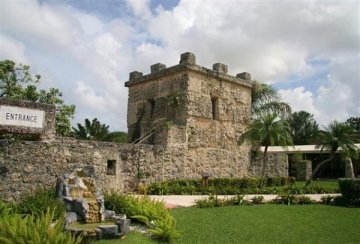


 Brushed With Mystery