
 Our ancestors had a strange sense of humour when it came to songs they created for their young. I grew up singing and hearing: “Rockabye Baby,” ”Ring Around the Rosy,” and reciting “Mary, Mary Quite Contrary,” innocent to the possible literal interpretation of the words: falling from a branch to your death, dying of the plague, or the horror of a woman being beheaded. I fell asleep into the peaceful ululation of my mother’s voice- only later did I realize the terror that my parents might be subjecting me to in my dreams.
“Rockabye Baby,” is probably the number one lullaby for babies and children. Printed by John Newbery in 1765, the song itself is about the horror of a baby falling from a tree. Then consider “My Baby Bumblebee” lyrics: a child crushing a baby bumblebee in its hands, and in some versions licking it off! We obviously have some cultural issues.
 Who hasn’t read the Mother Goose version of “The Three Blind Mice,” in which a woman cuts the tails off three optically challenged rodents? What about the fertile old lady who live in foot apparel, and beats her many children? Possibly our arachnophobic culture is the result of “Little Miss Muffet.”
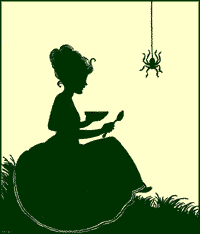 I was pushed over the edge two days ago when I found out that we (Being ME, English speaking Canadian from Ontario) were not the only ones. There is a larger international conspiracy to scare children through lullabies and nursery rhymes.
Yesterday, in an attempt to help teach my little girl French, we went through a Youtube version of “Alouette, Gentile Alouette.” The clip included the English lyrics with the French song. It only took a few lines before I learned my mistake: it was about plucking a bird!
Alouette, gentille Alouette
Lark, nice lark
Alouette, je te plumerai
Lark, I shall pluck you
Je te plumerai la tête
I shall pluck your head
(Je te plumerai la tête)
 (I shall pluck your head)
Why do we make such gruesome lullabies to sing to our children?
John Belleden Ker, who wrote in the early nineteenth century, believed that many English nursery rhymes where written in ‘Low Saxon’ and an example of anti-clericalism of the time in which they were created. In the 1930, Katherine Elwes published a book that claimed many of these nursery rhymes could be traced to historical events in history. It was Elwes who claimed “Ring Around the Rosy,” was based on the plague.
Armed with this new interpretation, our society attempted to cleanse the nursery rhymes of their ‘ick.’ New interpretations were created that whitewashed the gruesomeness of the rhymes of the past two centuries.
This reminds me of James Garner’s, “Politically Correct: The Ultimate Storybook.” While based on longer fairy stories, Garner takes a satirical view at the need for political correctness. For example, Little Red Riding Hood is taking, “a basket of fresh fruit and mineral water to her grandmother’s house-not because this was womyn’s work, mind you, but because the deed was generous and helped engender a feeling of community.” (15)
In contrast, psychoanalyst Bruno Bettelheim, criticized this revision of these nursery rhymes on the grounds that the older more gruesome ones helped children and adults deal imaginatively with danger and violence.
 For my own part, I believe that the rhymes that our ancestors sang and created where born of a different time than ours. One did eat lark, one was likely to die young, and there were possibly more threats to survival than in our modern age. Should we change them? No. They are part of our cultural heritage. They should open the dialogue for communication about history when a child is old enough to understand.
We should continue to add our own cultural footprint to the storehouse of lullabies and nursery rhymes that communicates something about our own time. It might read something like,” poor little Joan, lost her cell phone,” or “poor little Dext, he couldn’t text.” OK, pretty bad, I know. I’ll leave you to make up your own. I’ll keep reading the classics to Morgan- even with all of their passionate, gruesome intensity.

 In a strange twist of fate, William Burke became the victim of his own crime on January 28, 1829. His death mask, as well as his skeleton and a notebook made out of his skin remain. May I explain?
 Burke was an Irish labourer who left his wife and children to find work in Edinburgh. He moved into a lodging house in Tanners Corner, where he made good friends with the landlady and her new husband, William Hare. The old landlord had died strangely enough.
 May I step outside of the current story to tell you about cadavers (dead bodies) in the early nineteenth century? Science and medicine were a developing profession at this period in history. If you were a student training to be a doctor you had to train on a cadaver- meaning you had to pay for it. Legally cadavers could only be obtained if the person was a prisoner who was publicly executed. For the 900 students who each needed a body, the declining public executions left a great demand for bodies (you probably can see where this is going). At this time period in history, loved ones of a dearly departed might include mortsafes over the grave of their loved one- literally bars over the coffin to keep grave robbers out.
 The attending professor who did the dissection, Alexander Monro(who taught Charles Darwin), went so far as to dip his quill in the blood of Burke and write a brief memento of the experience. In an act that is inconceivable today, Burke was tanned, and certain objects were made out of his skin: specifically a pocket book and a calling card holder. These can be seen on exhibition at the Police Information Centre in Edinburgh. His bones and a plaster cast death mask, were kept for science, and are housed at the University of Edinburgh Anatomical Museum. Sounds like Hammurabi was the judge: eye for an eye a tooth for a tooth.
 She is called the most ‘kissed face in history’, but we know her as Rescue Annie. Most of us will at one time or another meet her in a First Aid class, and be forced to test our CPR techniques on her for a possible emergency. She will be lying there all too lifelike but silent.
 Peter Safar was an Austrian, who moved to the States in the late forties, and worked as an anesthesiologist. Together with James Elam, the two discovered the CPR technique. Needing a mannequin, the two turned to Asmund Laerdal, who was a Norwegian doll maker who fashioned Rescue Annie. It is Laerdal who made the decision to give Annie the face of L’Inconnue de la Seine. Perhaps for him it was a fitting combination: paring the face of a drowned woman with the hope of survival. A strange tale of Sleeping Beauty.
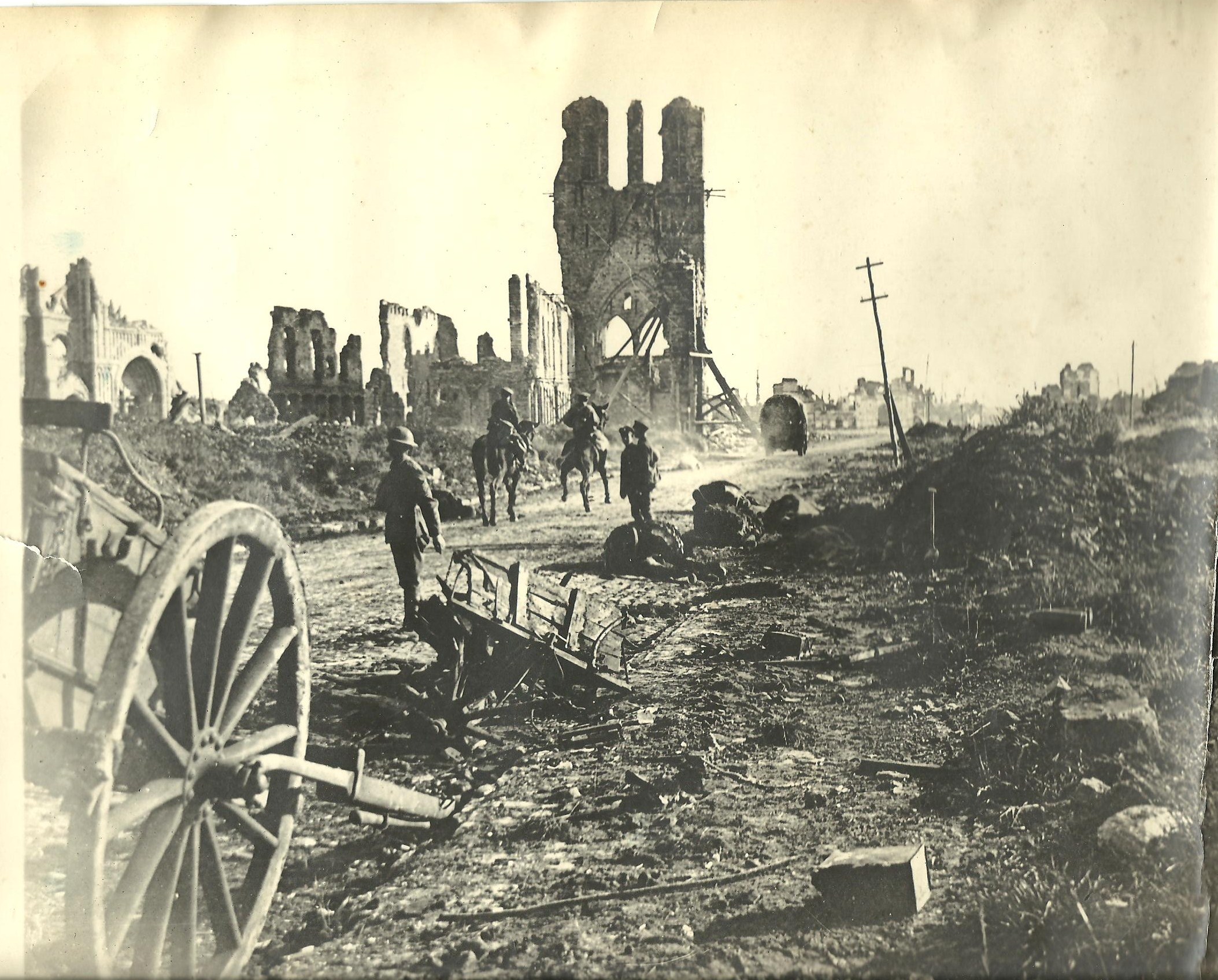


 Most of us have heard at least something about the tragedy of the Romanov family. Tsar Nicholas was the head of an ancient regime that repressed its citizens, and committed millions of soldiers to death on the battlefield in World War One. As a punishment for the arrogance and threat of his position, the Red Russians murdered the Tsar and his immediate family. His four daughters didn’t die fast enough- the volley of bullets that rained down on them seemed to be repelled, and in the end they were bayoneted to death. Tsar Nicholas’ son, who was a hemophiliac, didn’t have a chance.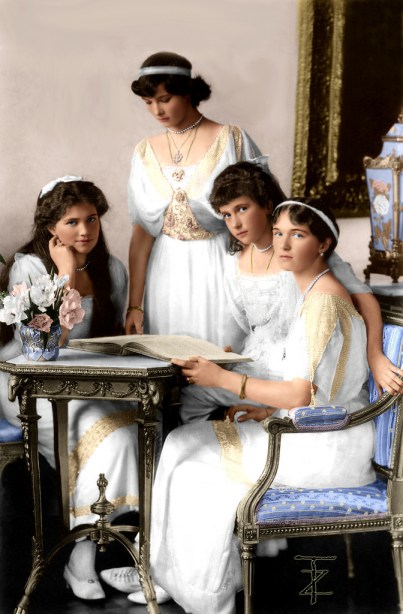
 she had initially fallen in love with


 Brushed With Mystery