A Tradition of Tea

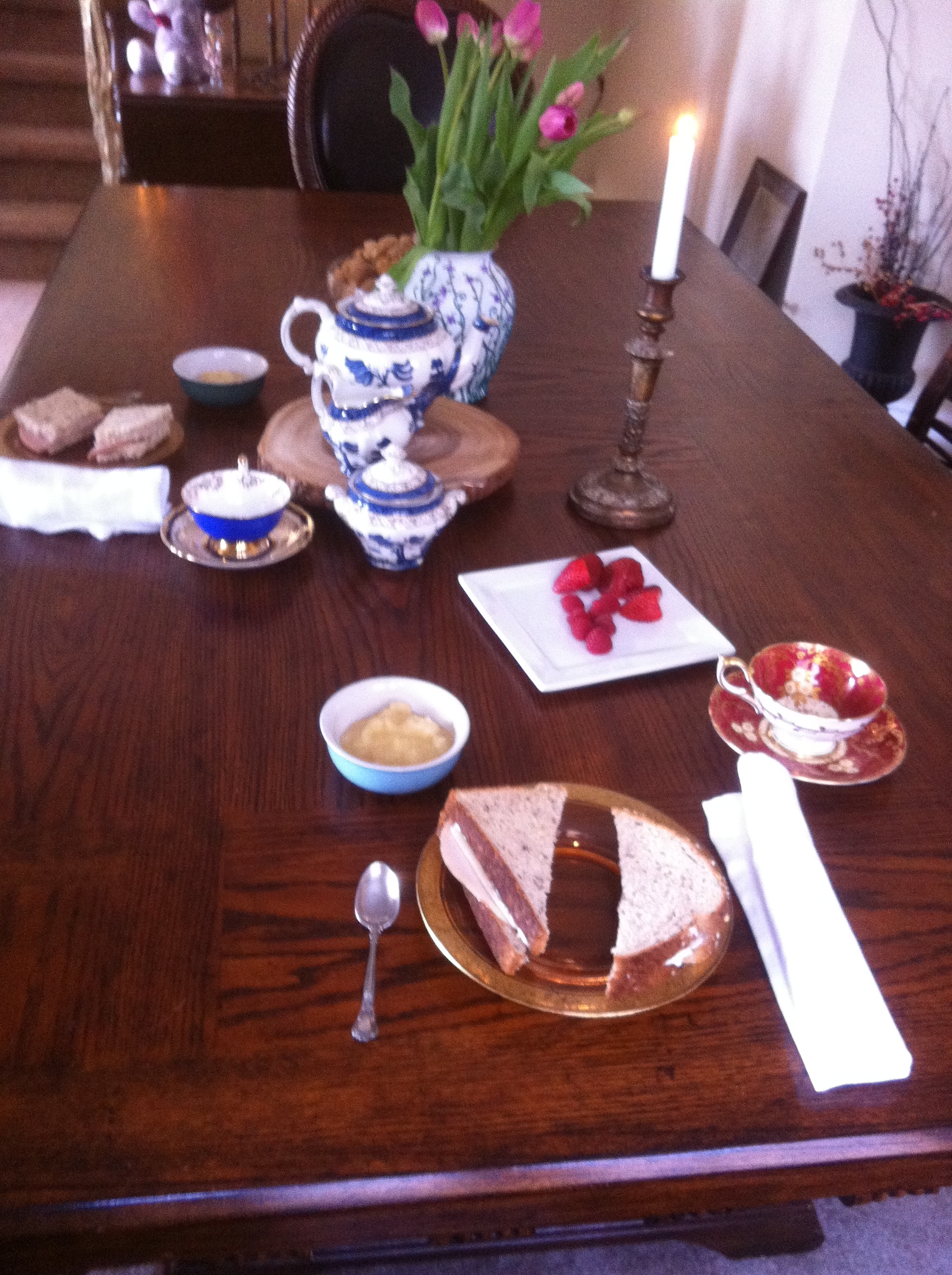
A vase with fresh tulips are on the dining table, and the blue willow tea pot with matching sugar  and milk sit patently waiting to be used. Morgan has chosen the red tea cup found in the cupboard, while I have chosen the regal blue- none are matching – all attest to gifts, birthdays, broken pairs that have tunnelled down through decades to the current china I have now.  She has a bologna sandwich, and rather than tea she will have some milk.  I have discovered that she likes to pour the milk; I allow her this rather than the heavy tea pot- each cup of tea I have in the small teacup overflows with the white liquid.

I stumbled on the idea by accident.  Morgan was talking about making tea for me as part of a game we were playing- and something clicked, “Why don’t we have real tea today?”

Her eyes lit up and I knew I had found something that I could connect the past with the present.

One of my memories of my grandmother and my grandfather were of having afternoon tea with them at Hales Cottage.  Cookies would be shared, and the daily news and mail would be read aloud. My grandmother and great grandmother’s journals are always talking about having someone over to tea and visiting others- it was a part of their tradition. I have their teacups, teapots and cutlery tucked safely in their wooden cupboard for safekeeping- it was time to bring them out and share them  and with them a tradition.

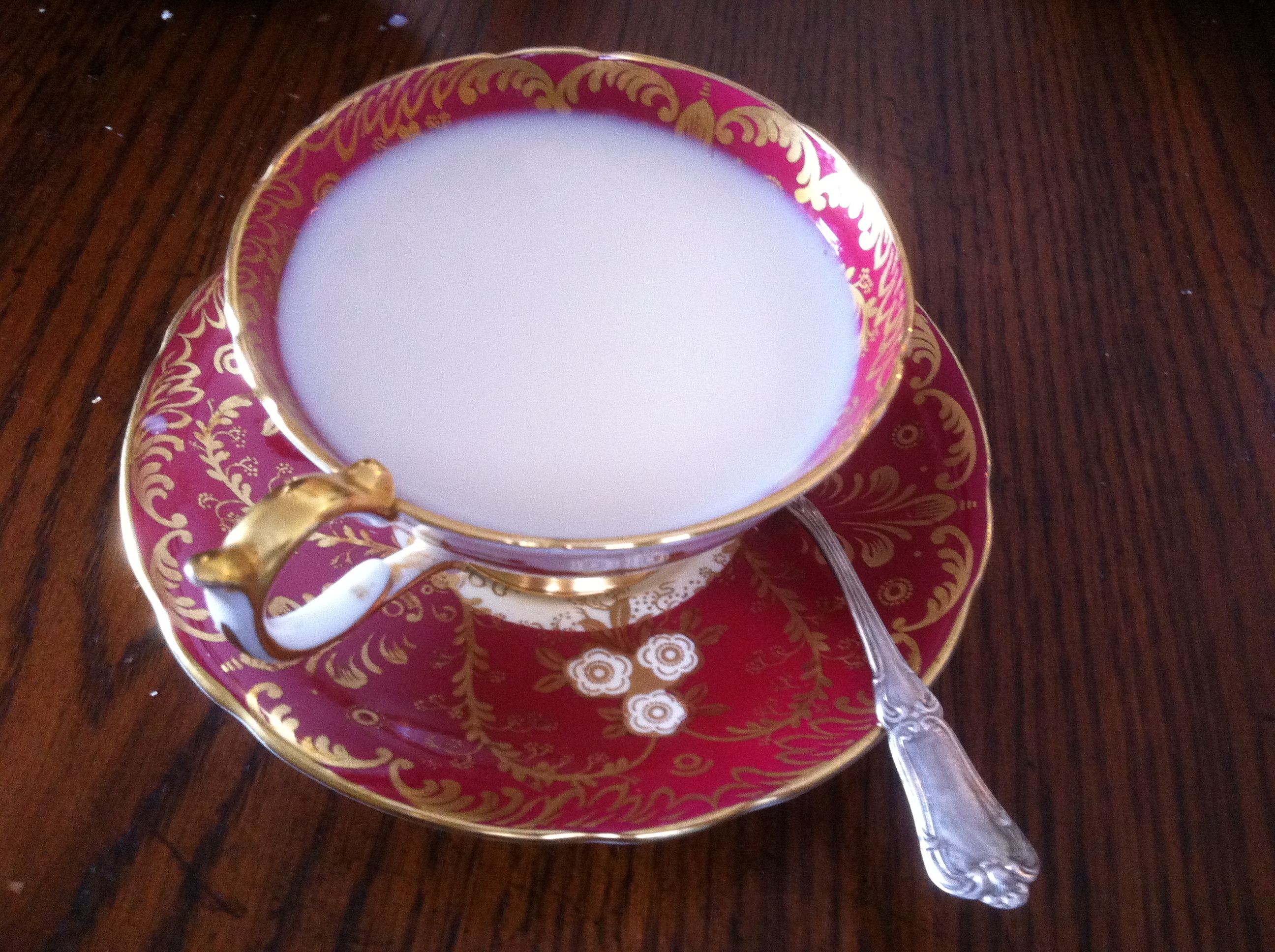
The first day I actually attempted to give Morgan Cambric tea- this is a term my grandfather used- I really don’t know if it is a real beverage or something he made up.  It is a combination of a little bit of tea, with a great deal of milk.  I wasn’t really surprised that she didn’t like it, but I wanted to give her the opportunity to try it.  I remember feeling very grown up when my grandfather presented me with my first  tea.  I don’t know if I liked it, but I kept taking it on the principle that it was an initiation into a realm of the adult world.

So at 1:00 on a Sunday you will know what we are doing- drinking from our overflowing teacups, and sharing some time outside the realm of the madness of everyday life to connect with the past, present and future.


Posted in children, Thoughts | Tagged , , , , | 1 Comment

Pandora

Tarnished by a cruel brush

Mine is a lonely path.

Forever the one responsible for pain and suffering.

A Titan that stole fire from Gods for mankind

Has his insides torn out daily.

Moulded from the earth,

I have been fashioned as a

Punishment on mankind- on man.

My sensual curves, tender touch, and power for creation

A dangerous warning

All gifted or

All giving?

Beware.

You know the rest.

There was a box I was not to open

Filled with all the plagues of mankind

(And some blessings I might add).

Before you judge me as cruelly as the poets of antiquity-

May I say in my own defense,

Hope remains.

P.S. This poem was based on a friendly challenge of poetry.  The topic was ‘hope’ and we had 30 minutes. My mind turned to Pandora immediately.  Of course I needed to do a wee bit of research before I could proceed- totally out of my character:-)

Sympathetic  to humankind Prometheus had violated the will of the Titans by sharing fire.  For his benevolent act, he was sentenced to an existence of having his liver pecked out by an eagle daily.  Finally, the cruelest punishment of all (tongue in cheek for those who don’t know me), Pandora was fashioned by the Gods for mankind- their cruel punishment for accepting fire. This is how women came to earth- she is our Eve in Greek mythology.

It might be noted that one of the Greek writers Hesiod, which wrote down the story of Pandora, seems to be misogynistic- note:

From her is the race of women and female kind:
of her is the deadly race and tribe of women who
live amongst mortal men to their great trouble,
no helpmates in hateful poverty, but only in wealth.

Certainly no trace of bias there- can one assume he has had his own fair share of issues with women?

What I wanted to do with my poem after the research, is play on Pandora’s knowledge of the lot in history she has been given.  One only look to all the artistic portrayals of Pandora for a clear image of how the collective unconscious views her: sexual, flighty, and helpless.  In looking for an image that would match my poem, the only one I could find was a sculpture that was created in the nineteenth century by Pierre Loison .  She stands regal- a queen- she holds the box in her hand, but is not the embrace of the helpless, but rather a symbol of her power.

Posted in Art, historical, poetry | Tagged , , , , | Leave a comment

Cambrai Cathedral: World War One Photo

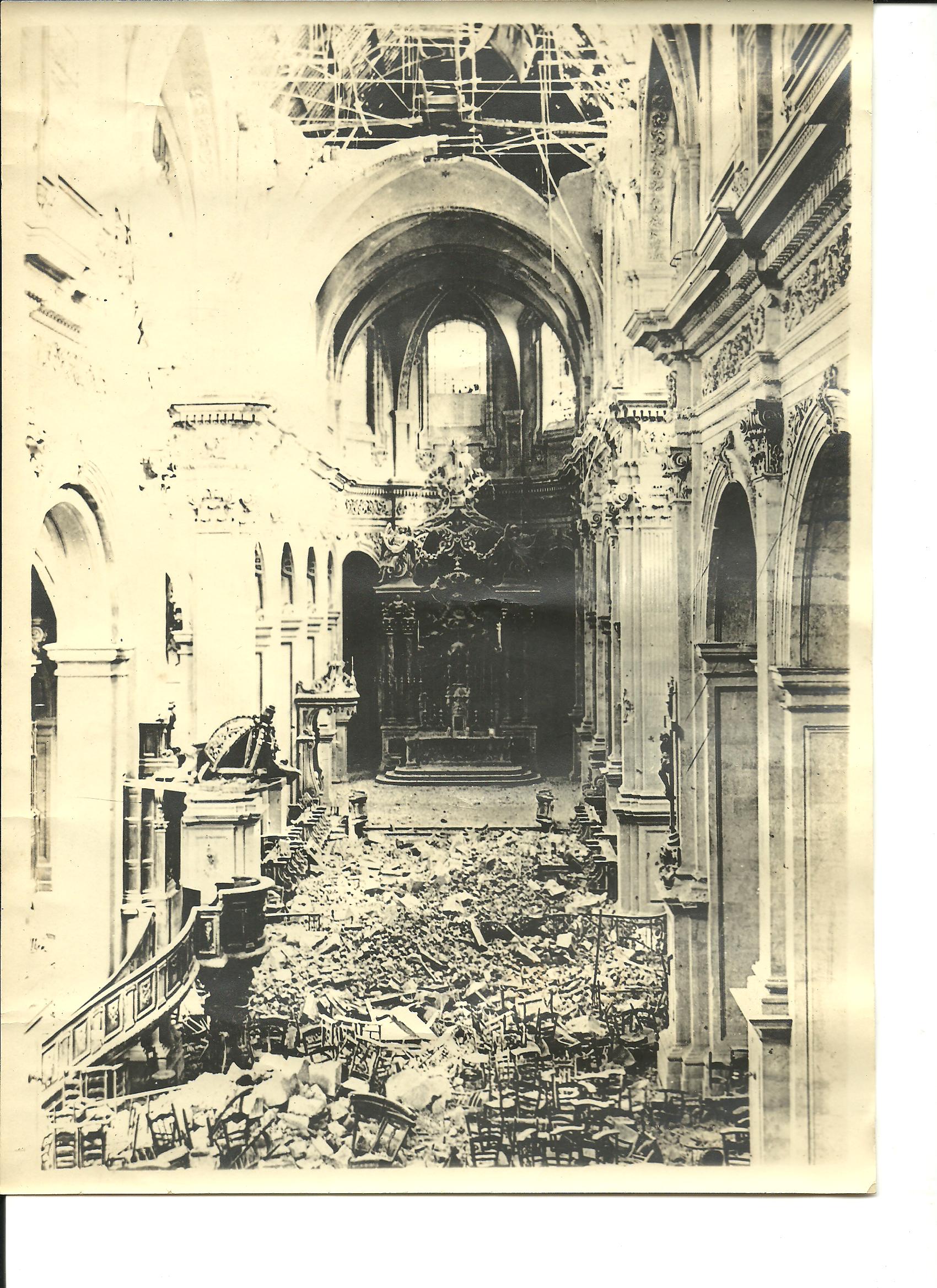
ImageIt is a picture of Gothic splendour in black and white gone terribly wrong.  Where once faithful men and women stood,  only trenches of wood  and scattered chairs remain. The apse and the alter stand defiantly against the destruction; a holy spectre in a silent church.

This is one of the pictures I found in my grandfather’s papers in the basement.  All are rolled tightly against time- only giving up their secrets with much tenderness and determination.  I assume that they were issued to my great- grandfather- Colonel Thomas Bedell, who was in charge of a regiment during World War One.  The church is Cambrai Cathedral- a building that had a long history of music and tragedy.

The original Cathedral at Cambrai had been completed  in 1274. It lasted until 1791, when it was converted to a grain store during the French Revolution.  In 1798 it was bought by a merchant that demolished the building and sold the stone.

The second Cambrai Cathedral had been build between 1698 to 1703.  During the French Revolution it had been turned into a ‘Temple of Reason.’ Mary and Jesus where covered in cloth- hidden from sight- and the altar was covered with famous philosophers- they were to be the new icons. A torch of truth was set beside the altar. It was to be the new religion.

As years passed the new religion made way for the old- the cloth hiding Mary and Jesus was removed.  In 1841 the new Cambrai church was given the honour of being the Cambrai Cathedral.

During World War One, the first battle of Cambrai was from November 20 1917 to 3 December 1917.  The British were victorious in pushing back the Germans with the use of tanks, but a German counter attack forced the British to retreat. It is interesting to note that even though they had suffered 90% casualty  in the battle of the Somme, the Newfoundland Regiment  assisted the British in this battle.

The picture I have is probably from the second battle of Cambrai.  On October 8, 1918 the 2nd Canadian Division entered Cambrai and pushed the light German resistance back.    On October 10, the  3rd Canadian Division entered a deserted Cambrai.  Frederick  Banting, the man who discovered insulin, was also wounded at this battle.

I found another picture on the Internet of the damaged Cathedral.  Time has passed:  most of the timber from the collapsed roof has been removed from the nave.  Canadian soldiers face the apse in prayer, kneeling on the chairs that they rescued from the destruction.  A priest is praying at the altar that once was dedicated to reason and truth.  The caption reads that they are attending a Thanksgiving service. What were their prayers:  memories of friends lost in the war; a wish for peace; or desire to return to loved ones?

Posted in Photo of the Day, politics, World War One | Tagged , , , , , | Leave a comment

Intriguing Women: Lola Montez

I have found the most interesting woman on my spelunk into the Internet.  She calls herself Lola Montez, but her real name is Eliza Rosanna Gilbert.  She lived almost two hundred years ago: from 1821 to 1861. While many of the women I know from this time period – especially my family- are pious and centered on their role in life as wives and mothers, she challenges the norm of the time: she has many lovers, travels extensively, gets involved in politics, writes books, is a professional entertainer and basically does what she wants.

Her early life possibly set the pattern for her future relationships.  She was born in February 17, 1821 in Grange, County Sligo Ireland.  Her father died of cholera in India where he was stationed when she was only one, and her nineteen year old mother spent very little time procuring a new husband for herself: Captain Patrick Craigie

The young Eliza seems to have been hot-headed and temperamental.  She was sent to Montrose Scotland, at the early age of five to her step father’s father, for further educational training.  Some accounts say that at his time she ran through the streets naked, and put flowers in the wig of a man in church (there are stranger things a little girl can do I bet).  She only lasted eight months in this location. By the age of ten, she was shipped to her step-father’s sister who ran a school in Monkwearmouth England. This residency only lasted a year.  She was then sent to a boarding school for five years.
By the time she was sixteen, her mother returned to Britain, with the intention of marrying her daughter to an older man of good status, Sir Abraham Lumley who was a judge in the Supreme Court in India. This was the beginning of her scandalous history, for rather than following her family’s wishes, she ran off with one of her mother’s admirers, Lt. Thomas James, who had accompanied her from India.

The marriage was possibly one of her longest commitments, lasting ten years.  She later claimed that she left due to combinations of physical violence, alcohol and infidelity on his part. Stationed in India, Eliza left for England, only to have a torrid love affair with an officer on the ship named Lennox.  Her husband used this infidelity as grounds for divorce.

The affair lasted for a few months, which left Eliza disgraced by decent society, and at odds regarding her future career.  Rather than let this situation get the better of her, she used what nature had given her: her beauty.  She had dark skin and hair, a clear complexion and piercingly blue eyes. Eliza left for Spain, learned how to flamenco dance and returned six months later with the stage name Maria Dolores de Porris y Montez- or in short- Lola Montez.

This is only a beginning of her adventurous and troubling life, and part 1 of my blog.  She will tour the globe, write many books, and her love affair with a king will start a revolution.

Posted in 1920s, historical, history and literature | Tagged , , , | Leave a comment

Returning..

The house is sold, and I have had a blissful few weeks of relaxation.  I need to return to my research- try to find a new compass.  I am starting to go through great gran’s journals again…so much to share!

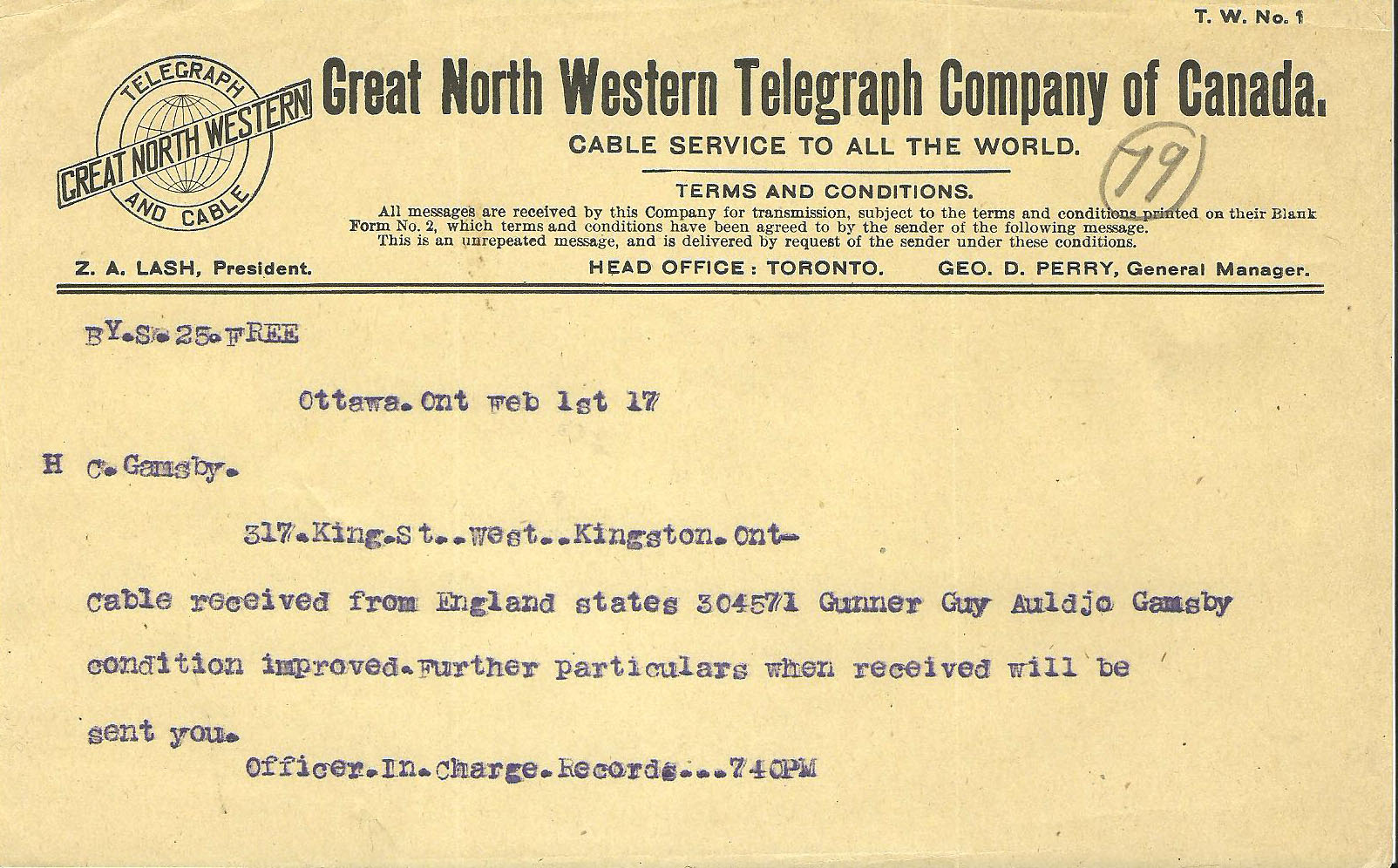
For the sake of beginning again, I will share something I found in great gran’s journal from World War One.  It is a telegram to her telling of her son’s condition after being shot.  I can only imagine her terror.  Knowing her future, he does survive- lives to be an old man.

Posted in historical, Kingston, primary resource, World War One | Tagged , , | Leave a comment