
WordPress Challenge




I have always loved candles. An element of fire-they are a symbol of eternal hope in the world- the sacrifice of Prometheus. They cast a soft light that illuminates, but softens the edges of everything. Used by our ancestors for thousands of years, they are still used to celebrate life (birthdays), and the seasons (Hanukah, Christmas or Beltane for example). Maybe it is a residual of our ancestral memory that councils our instinct to respect fire for its life saving qualities.
One of my first memories –I must have been two or three because my parents separated by the time I was three- was during a storm at my parent’s home. The memory comes back in bits and pieces, but I remember the power was out, and I was afraid. My mother sat me on her lap in the family rocking chair (holding at least five generations of family memories), a candle sat in front of us- there was a scent of Sandalwood in the air.
She sang “Jesus Bids Us Shine.” I remember that she had me sing with her. The song comforted my fears, and helped to develop a lifelong appreciation for singing and candles. I wish I could ask her about that night- a parent has the ability to add dimension to a child’s memory: colour, age, time, location and context.
“In this world of darkness, so we must shine- you in your small corner, and I in mine.”
Thank you mom.

 This medallion was a gift from my grandfather. It was minted in 1670 by John Roettiers, during the reign of Charles II and his wife Catherine of Britain.
A medallion to celebrate colonization, the motto written on one side of the coin states, ”diffuses in orbe Britannus.” It neatly encircles most of the world. Loosely translated this means Britain moving throughout the world- Imperial claims almost four hundred years ago.
Charles II returned to England, after having been thrown out by Oliver Cromwell . At the time this medallion was minted, he had been back ten years. His reign is called the Restoration-as in the restoration of the monarchy (and restoration of the theatre, and women on stage).
The other side of the medallion shows Catherine and Charles II in typical Roman profile fashion. In 1670 Charles II was forty years old and Catherine was 32. They had been married for eight years. Catherine was Portuguese. Their marriage was childless, but even after request from Parliament, Charles refused to divorce her. As part of her cultural impact, Catherine brought tea and the use of the fork to England.
Five years before the minting of this medallion, England faced a great plague that killed 100, 000 people and killed almost 20% of the population. It was caused the bubonic plague- made famous by the rhyme “Ring around the Rosy.” If people were believed to be infected they were literally shut up in their homes (the healthy with the sick), and a red cross was posted at their door. Guards, if they could be found, were hired to ensure that the people inside did not escape. Dogs and cats were slaughtered with the understanding that they might be causing the plague, but in reality this only made the situation worse because the lack of predators bolstered the rat population (the true carriers of the disease).
Four years before this medallion and just after the plague was subsiding, London was besieged by a great fire that destroyed 13,000 homes. Samuel Pepys, a diarist and politician at the time, provides a first -hand account of the fire in his journal. It started in Thomas Farynor’s bakeshop- incidentally he was baker to King Charles II. While there was minimal loss of life in this fire, it destroyed a majority of London that had to be rebuilt.
Charles had no legitimate heirs, but had many children from his mistresses. The present Dukes Richmond and Grafton can trace their lineage from Charles II, as well their most memorable family member: Princess Diana. It is said that Prince William of Wales will be the first descendant of Charles II to be monarch.
On closer inspection, it is evident that the continent of North America seems to be missing on John Roettiers design of the world- yet the Mayflower had landed at the tip of Cape Cod in 1620, and It was Charles II who granted the charter to the Hudson’s Bay Company and named it Rupert’s land. Certainly North America is only on the periphery of British interest at this time. Little did they know how important this large continent would be to future history.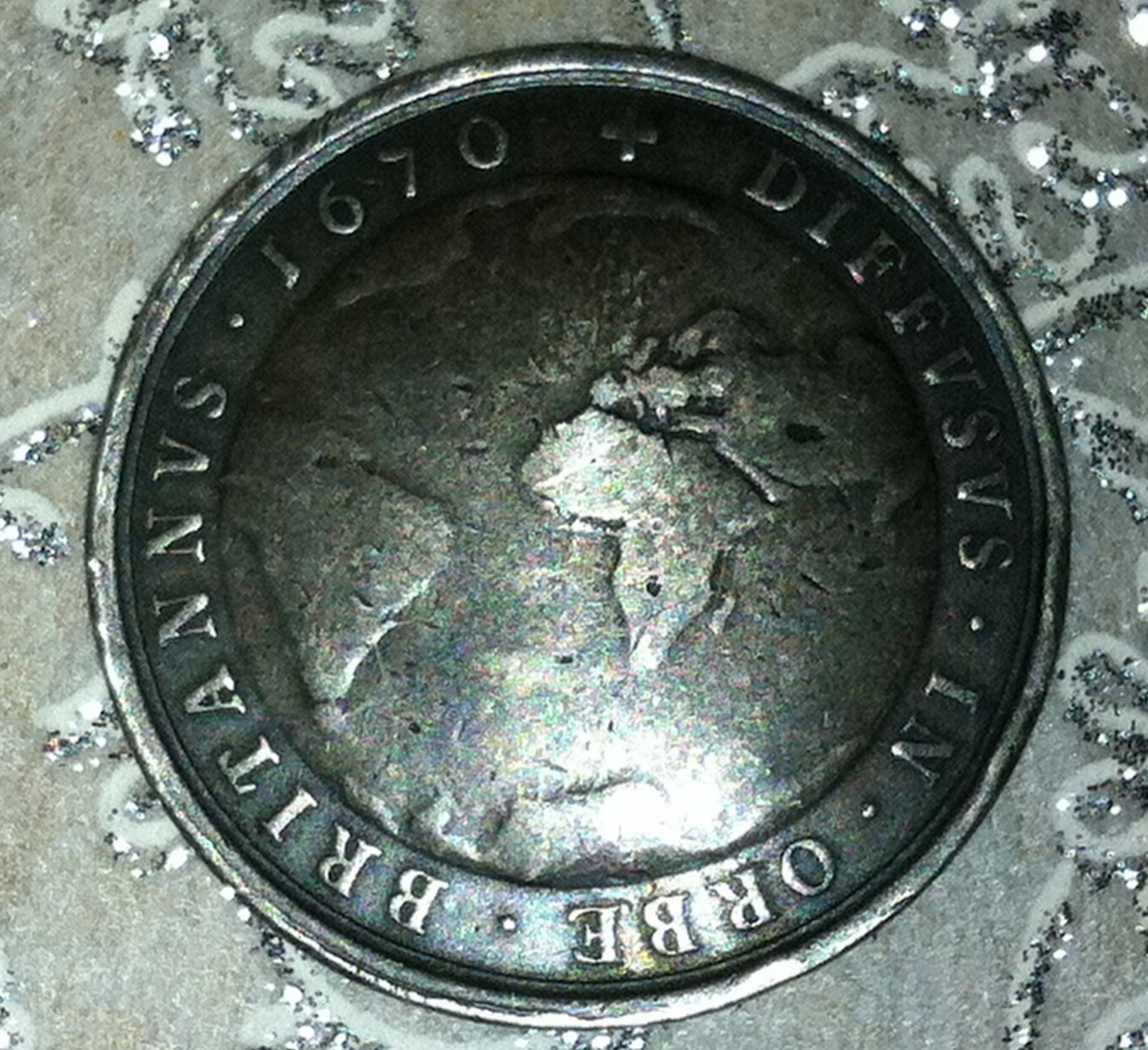

Today it is hard to concentrate
I’m hoping art will ease my distracted spirit
I’m going to sell the family home- a promise of a future, a shedding of the past
Absence of fulcrum, I drift
It’s almost too much for my sentimental heart to handle
So I turn to art.

Lose myself in the weave of the fabric

The timelessness of the colours…
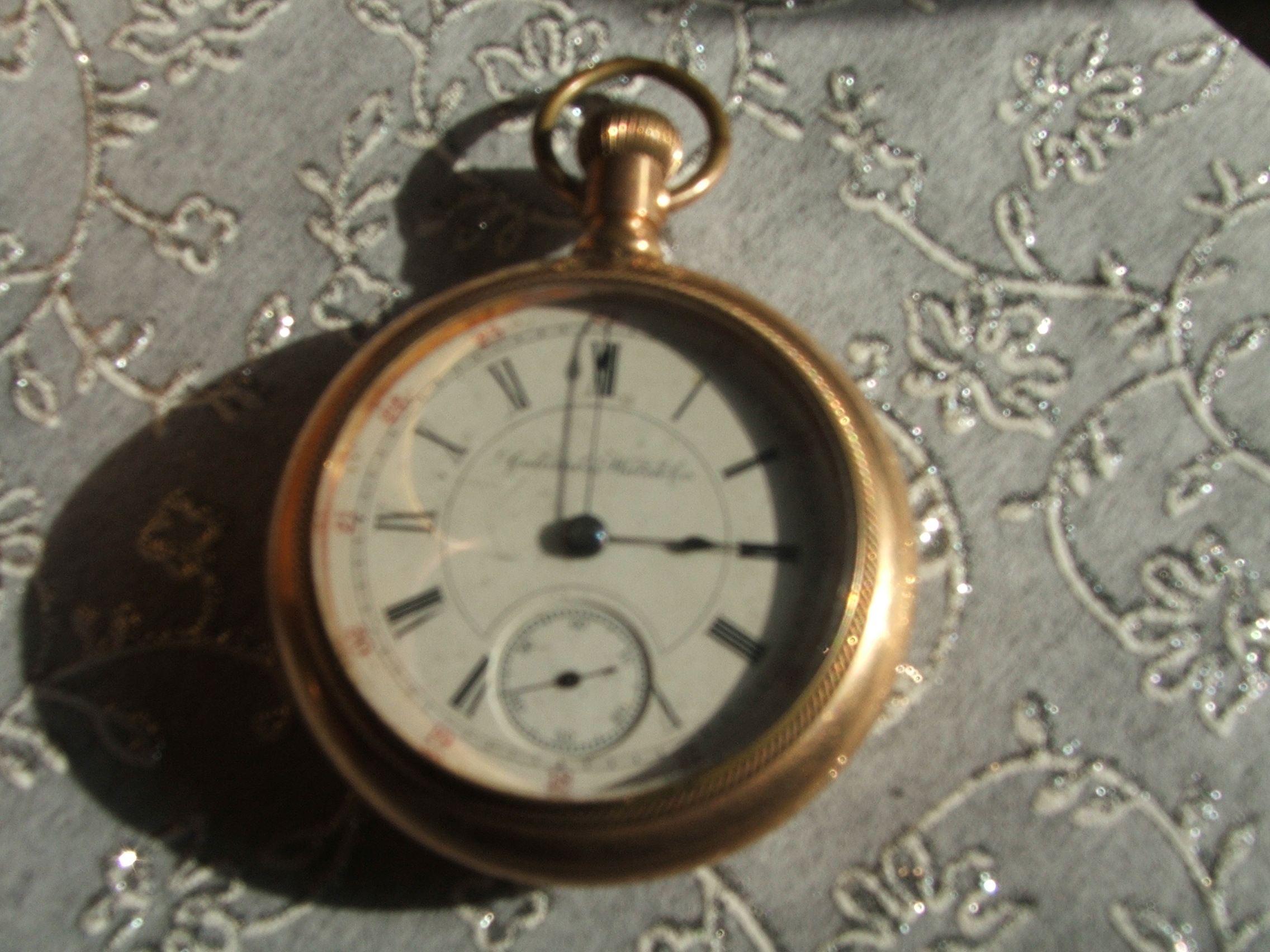
Time…we can count it, beat it, watch it- but we can never have it back…

 Many might know the story of Princess Wanona; centered around the lovers rock in Minnesota, she is a Native American who leaps to her death from the precarious rock rather than marry the man her father has chosen. Another version tells that she and a young Dutch settler jump to their death.
In the Dakota language, ‘Wanona’ is not a personal name, but the term for the first born who happens to be female. Possibility the term might refer to the daughter of an Indian Chief.
The Gamsby manuscript talks about Dorothea befriending Wanona, the daughter of an Indian Chief she meets in Quebec. Wanona is both tall and intelligent- she is almost worshiped by her people. This is strikingly similar to the impressive figure of Winona in Luke Brodhead’s book, “The Delaware Water Gap, Its Legends and Early History. ” In this story Winona is a great beauty who is both kind and intelligent.
In the Gamsby manuscript, Wonona befriends Dorothea and her friend Cordellia, and attempts to learn their language. As the daughter of the Indian Chief (1780-1790s), Protestant Minister Montmollin and the sisters at the local convent wish to encourage this acquisition of Knowledge for conversion. But for all of their effort, she shows little interest in anything other than the acquisition of the basic English language for her people-this again parallels Broadhead’s book. The racial divide in this time period seems less concrete or oppressive when one reads that Wanona, “condescended to join us often as we visited the encampments.” She is admired in her own right.
This Wanona doesn’t die by jumping off of lover’s rock, but returns in the manuscript to seek the help of her old friends when her child is sick with small pox. Called the scourge by the inhabitants, the Native Indians suffered more from small pox. To survive, Quebec inhabitants went into the bush and made log cabins to wait out the scourge- the goal was to avoid transference of the contaminant. It is here Wanona finds Dorothy and asks for her help on keeping her infected three month baby son alive. The rest of her people have left- including her Indian brave. She alone, according to the manuscript, trusts the white settlers-and specifically the girls- to save her son.
Rather than throwing Wanona out on her own, they take her in and bathe her child in ashes and water. They inoculate Wanona by infecting her with a pustule. Her costume is described: “two broadcloth petticoats the outer one gorgeously embroidered with quills and glass beads, a sack of white fur under one of sable. Her moccasins of deerskin embroidered to the knee, and over all a large broadcloth blanket embroidered with gray surreal fur, and a nice beaver hat embroidered with choice gay feathers.”
Thanks to the help of Dorothea and her friends, the child and mother recover to return to their people. We encounter the son once more in the manuscript when Dorothea returns once more to her family in Boston to visit.
In the summer of her stay in a secluded hamlet, Dorothea meets the chief of a Canadian tribe. She can distinguish him by the paint and wampum feathers. They recognize each other. His name in the manuscript is Metalic. He is Wanona’s son now grown- his mother is no longer living. He must speak broken English because he tells Dorothea news from Quebec.
The story of Wanona’s death is not told, but this glimpse we get from the manuscript adds to a deeper understanding of her and the relationship between American Natives and the early settlers. The inclusion of this name in the manuscript for a Native princess also adds to the possibility of this being more a generic term understood by settlers as a specific name.

 Brushed With Mystery