
 We stayed for some time at a boarding house in Hampstead and while there met Mr Creswick and his family. An officer in Dad’s (sic) regiment brought them in to tea and I received an invitation to spend the next day with them at High Barnet.

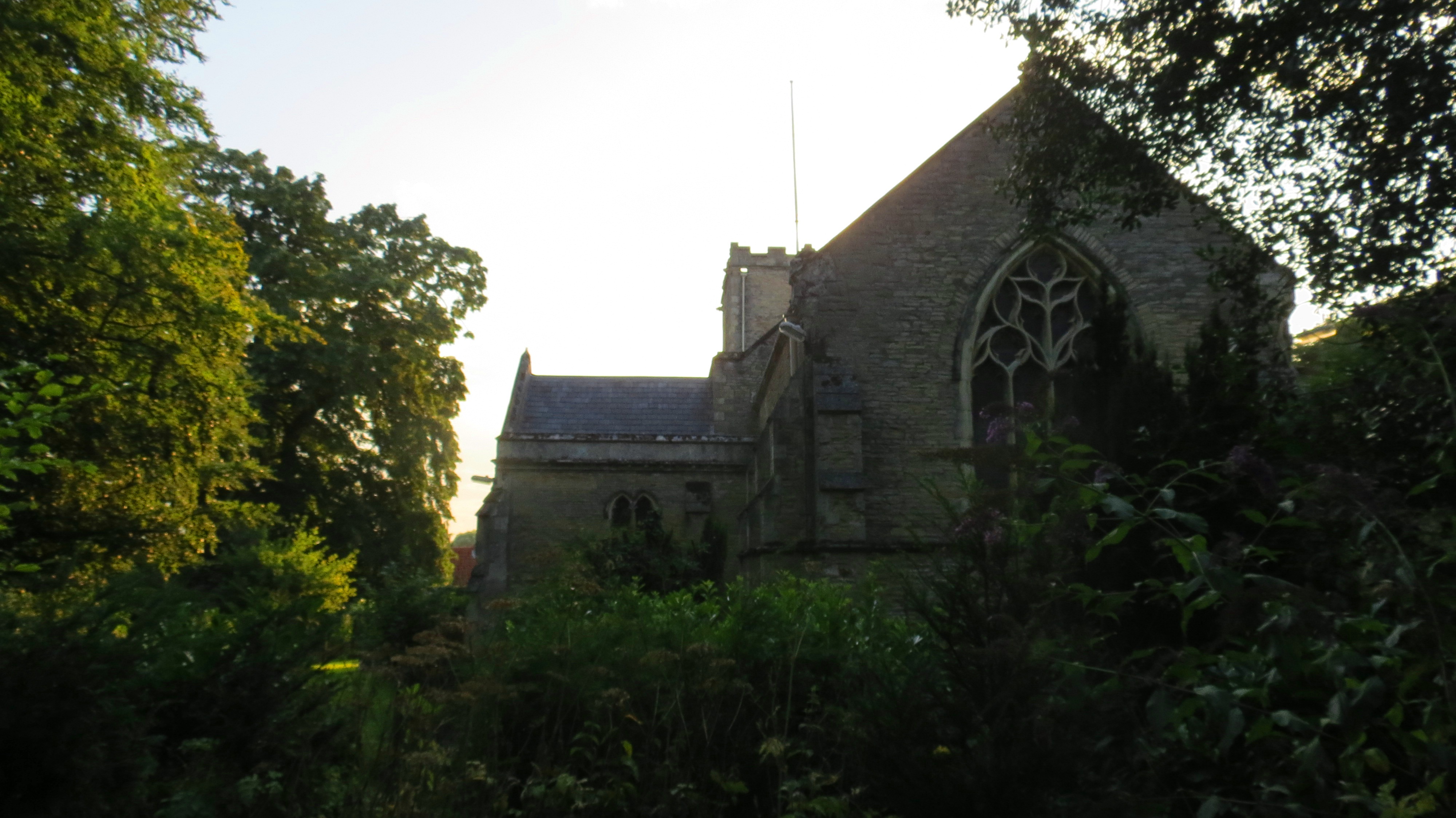
Early next morning I set out and after an hours tram ride arrived at Barnet. Mr Creswick and his son Dick were at the tram to meet me and we started out for a walk to Hadley Woods. It seemed strange indeed to see the green grass, and the roses blooming, in winter. As we passed Hadley church Dick pointed out the date over the door was 1426. The old ivy-grown church had been standing when America was discovered, when the Battle of Barnet was fought. On the square tower (which I afterwards found to be characteristic of the Sussex churches) was an old beacon which was one of the many to flash the news of the coming Spanish Armada.
Further along we investigated the old stocks and passed by the dead roots of an oak under which Latimer once preached, so coming to an old house which we had procured permission from those living there to see.
This house is built around an old inn and the purpose in building it was to keep the ancient building from falling in ruins. The inn is one of those which was visited by Dick Turpin, the great Highwayman himself.
Nearby is Hadley Woods, now only a few miles in extent but once the deer-forest of the Norman kings. It is still the prettiest spot, easily accessible from the tram-line and on holidays, the London people come in crowds to spend the day in the country.
After a short walk in the woods we returned for dinner, passing on the way a house which David Livingstone inhabited for some years.
 After tea we went for a walk in another direction, to see the battle-field, the field where the Battle of Barnet was fought and won, or perhaps I should say fought and lost, for the most outstanding feature of the battle is the death of the Earl of Norwick, the Kingmaker. The oak where he made his last stand has long been gone but the place is marked by a plain, stone monument. The place where in the midst of his enemies, he turned at bay, placed his back against a large oak tree and dared them to come on (sic). They hesitate, afraid of that mighty, double edged sword, but now they surge forward. Soon the oak is surrounded by a heap dying and dead, the earth slippery with blood. Again they come on and now numbers tell, the kingmaker slips and falls, with every joint in his armor pierced by his enemies swords. He dies with defiance on his lips to the last. Standing on that spot we can reconstruct the whole story. History seems more real, more vivid, more interesting and I began to see many pleasant hours I was destined to spend among th ivy-covered ruins of merry England. Dick called us back to life remarking that it was nearly tea-time and after a brisk walk we arrived just as tea was ready.
After tea they all walked as far as the tram with me and there we parted, but only for a few days. I returned to Hampstead very much pleased with my new friends and ready for bed after a happy day.
{Footnote: In the midst of a war that would take our world into a new way of seeing the battlefield, the image of my grandfather imagining the bloodbath around that oak tree seems more poignant.
I love his words, “History seems more real, more vivid, more interesting .” I agree my beloved. Thank you for leaving a trace…..xxx}

 Next morning everyone was on deck many of us to get our first real glimpse of the motherland. It was a bright, sunny, day and the gulls were dipping and wheeling in all directions. The hills surrounding the harbour were clothed in the greenest of green grass with a few clumps of hazel- trees interspersed among the hollows. On the left an oak woods was seen in the background. As we entered the harbour an old warship appeared. It was the victory herself. She seemed small beside the big liner and yet, in days gone by she had held the hope of being in England. It was her deck that great Nelson fell in the hour of victory.




 Brushed With Mystery