
 His death reads like one of his detective stories; found alone in the streets, wearing someone else’s clothes, and repeating an unknown name. He would die a day later in hospital – his medical records mysteriously disappeared. His life reads like one of his short stories; abandonment, lost love and untimely death. America’s Edgar Allan Poe could be a character in one of his own tales of horror.
 Edgar Allan Poe was born to a family of traveling actors in Boston, Massachusetts, on January 19, 1809. A year later his father, David Poe Jr., abandoned the family of two boys and a baby girl on the way. By the tender age of two, Poe was left an orphan when his mother, Eliza Poe, succumbed to tuberculosis. The children were divided, to be raised by different families. Edgar would be raised by John and Frances Allan.
The Allan’s went to Britain, where a six year old Poe was enrolled in a series of boarding schools in Dickensian fashion. After five years overseas, Poe and his guardians returned to Richmond, Virginia. At sweet sixteen Poe proposed to a neighbour, Sarah Elmira Royster, before he headed off to university.
 This is the next phase in Poe’s calamity ridden life. Royster’s father disapproved of Poe who he saw as a man with little prospects. The letters that Poe wrote to Sarah were intercepted, and she was led to believe by her family that Poe had renounced her. Two years later Sarah Royster married a wealthy business man. True to the narrative quality of Poe’s existence, Sarah will reappear on the pages of his life story.
After the disappointment of failed love, Poe joined the military. He served for four years, and finally ended this career after being court marshaled for gross neglect of duty. A few months later his brother died. It was at this point that Poe turned to the profession of writing. He also married his thirteen year old cousin, Virginia Eliza Clemm, when he was twenty-six.
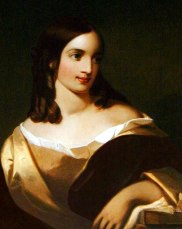 It was seven years into their marriage when his wife showed signs of the same condition that had robbed Poe of his mother- consumption. In folklore this condition was associated with vampirism, considering that it was a disease that took the young: would produce blood in the cough, debilitating weakness, and night tremors. Poe re connected with his macabre side throughout her illness. Two years before she died he would write “The Raven.” It was also during this time period that Poe started writing a generally new genre of fiction called detective stories- the like that would inspire the calibre of Sir Arthur Conan Doyle.
 With a keen love of science and the scientific method, Poe enjoyed solving puzzles. He was a passionate cryptologist, who shared his interest with a curious audience eager for a good mystery. His detective protagonist, Auguste Dupin, lived in Paris and was not a professional detective. The second short story featuring Auguste Dupin entitled, “Murders in the Rue Morgue” was based on a real murder. A young pretty cigar shop attendant, Mary Cecilia Rogers, went missing in New York in 1938. Her body was later found floating in the Hudson River. It is through Auguste Dupin, that Poe explores the reason for the young attendant’s disappearance. It was his belief that part of the detective’s job was to get into the mind of the criminal to understand their motives in order to catch them. This form of detective investigation is explored in the current movie “The Raven,” based on a fictitious encounter between a killer with non-fiction Poe.
In 1847 Virginia died at the tender age of twenty-five; following the same tragic end as his mother. One year later Poe attempted to contact his first love- Sarah Elmira Royster. A widow with two teenage children, their relationship was disapproved of by her family. The stipulation in her husband’s will stated that she would lose much of her income of she remarried- the plot thickens.
 True to his luckless life, Poe established what seems to be a promise from his true love that she would marry him in 1949. Four days later Poe was found delirious on a Baltimore Street, and died shortly after; cloaked in mystery like one of his detective stories. He was only forty years old.
Since World War Two, a cloaked visitor honours Poe’s birth and contribution to literature with three roses and half a bottle of Martel Cognac- adding to Poe’s mystery.
“Deep into that darkness peering, long I stood there wondering, fearing,
Doubting, dreaming dreams no mortal ever dared to dream before;”

 I’ve never been interested in politics or economics before- maybe I’m just getting old. The age has dawned on me where I am no longer willing to sit back passively and accept what happens at face value simply because I don’t understand, or worse yet, because I don’t know the first step in asking the important questions.
 It is certainly not the noun anyone wants to join the word budget- but here we are! In fact Miriam-Webster named austerity their word of the year in 2010 because it had received the majority of requests for definition. I have currently done my part to trump that record in 2012.
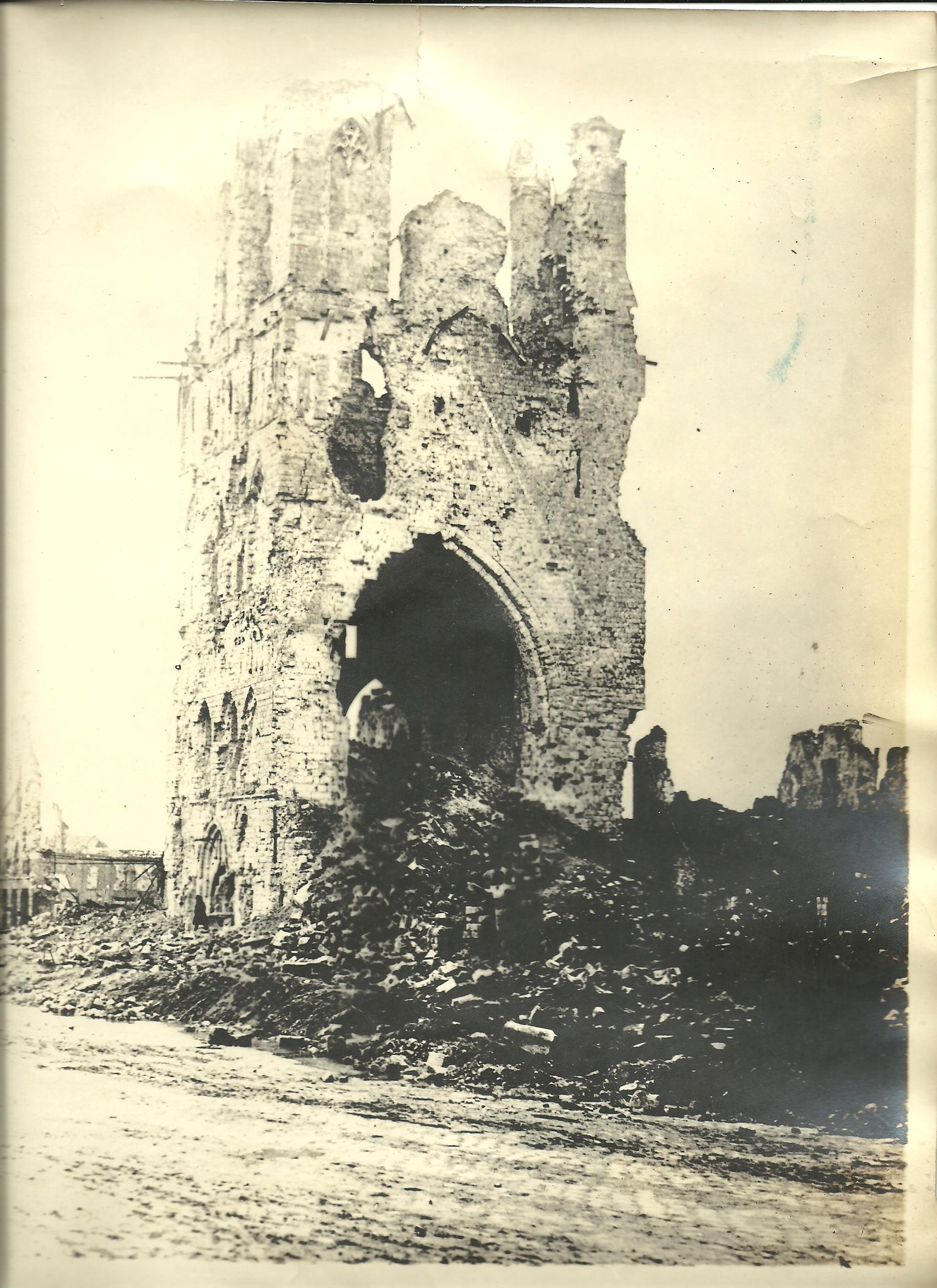


 Gotham is known to modern culture as the fictional city in which writer Bill Finger’s comic character Batman fights crime. The name was chosen by a random turn of the New York telephone book. While random for Finger, the name has a curious history.
 Gotham is a village in Nottinghamshire England. The word itself might derive from the Anglo-Saxon name for goat, and mean goat dwelling- it is pronounced goat-ham. The village is famous for the legendary actions of the ‘wise men of Gotham’ who, to avoid the imposition of King John, acted like fools. The intentions of the king vary with the tale being told; he attempts to impose more taxes, a road through the town, build a castle or create a park for hunting. No matter what the king demands of his subjects, their reaction is the stuff of legend. The eight hundred year old tale, shares how…
 If you come to a red octagonal sign standing on a post by the side of a road, chances are you will know what to do without even knowing the language. The stop sign is an international symbol. How did a geometrical shape transform into the symbol for an action? Blame it on the car.
 Detroit Michigan is linked to the Great Lakes and the Saint Lawrence Seaway by the Detroit River. The city therefore has access to the Canadian market, and the international market by boat. A majority of the automotive empires that are still household names started in this State at the turn of the twentieth century: Ford, General Motors and Chrysler. With the boom of the automotive industry came a huge influx of population- from 265, 000 in 1900 to over 1.5 million in 1930. Ford was known for paying employees well enough that they might be able to afford the machines that they made. Responding to this new population glut, as well as the popularity of the car, demanded the ability to manage movement- and the stop sign was born. The first known stop sign was erected in Michigan in 1915- the car capital of the country.
 Originally the black letters were painted on a white background, but with the creation of the American Association of State Highway and Transportation Officials in 1914, a new design was proposed to regulate all signs in the United States. In 1922, the red octagonal sign with white letters was created. The eight sided shape was chosen so that drivers that are not facing the words, and that are driving at night can quickly identify the symbol.
 By 1968 a United Nations Convention adopted the red stop sign as an international symbol. All member countries would use the red octagonal shape, signalling a new turn for our global community.

 Brushed With Mystery